

Laser Floater Solutions
Our experienced and dedicated team at the Global Retina Institute uses a comprehensive approach to evaluate the severity of your floaters using ultrasonography and videography.
We also offer a range of treatment options, including vitrectomy and laser floater treatment through the FDA-approved Ellex Ultra Q Reflex Laser.
We strive to help you manage and get rid of floaters in your vision in a safe and minimally invasive way. Contact us to schedule your consultation and visit our laser floater treatment website to learn more.
Contact UsEvaluating Floaters with Ultrasonography & Videography
Floaters are small flecks or cobweb-like specks that appear in your field of vision. They are a natural part of aging and are usually harmless. However, if you experience a sudden increase in floaters or flashes of light, it may signify a more severe condition that requires medical attention.
We use ultrasonography and videography to detect underlying conditions that may be causing the floaters.
Are You a Candidate for Laser Floater Treatment?
You will need to meet with us to discuss your interest in treatment for vitreous floaters and determine if you are a good candidate.
Primary Criteria for Laser Floater Treatment
- Your floaters materially impact your quality of life
- You have had floaters for at least 3 months
- Your floaters are at least 3mm away from both your retina and lens
What Is the Cost for Laser Floater Treatment?
Additional Sessions
There are 2 components to laser floater treatment at the Global Retina Institute:
- Initial consultation: A dilated comprehensive eye exam for both eyes (generally covered by insurance), and Dr. Ross will spend about 45 minutes with you.
- Laser Floater Treatment (LFT): 2 sessions included
Laser floater treatment is rarely covered by insurance. The cost is $1850 per eye, which includes up to 2 treatments. Most patients do require 2 treatments. Dr. Ross will block an hour for your treatment.
Any additional treatment is $450 per eye. Depending on the time frame from your initial LFT, you may require an interval examination.
What to Expect During Your Eye Exam
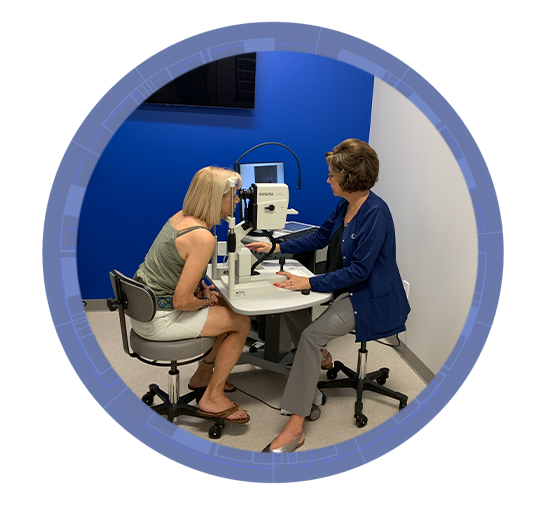
The initial exam will involve a dilated eye exam of both your eyes. A full medical history and review of systems will be performed. A slit lamp examination using Haag Streit BQ 900 Slit Lamps will be used.
These are modern imaging machines used for the retina clinic. These digital images locate your floater or floaters and determine whether they are positioned at least 3mm away from both your posterior retina and your anterior lens. The floater is often viewable and will be shown to the patient in vivid detail.
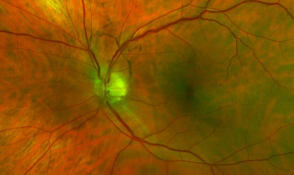
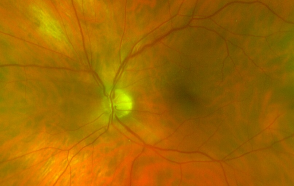
High-resolution images will be taken of your eyes using both the Heidelberg Spectralis OCT-A and the wide-angle camera, the California OPTOS. A dynamic ultrasound of your eye may be performed as well.
Imaging & Treatment
All of these imaging procedures are noninvasive and relatively easy to perform. This consultation exam process is the standard retina exam done many times, every day of the week, by the Global Retina Institute. All of your testing will be reviewed with you so you can make an informed decision.
The first treatment can occur once the exam is complete, your candidacy is affirmed, and the patient agrees to proceed with laser floater treatment.
The second treatment can occur on the same day, however, we usually recommend having any second treatment occur on a different day.
If you are having both eyes done, it can be done over 3 separate days, which can be consecutive if you are traveling from outside of the Scottsdale/Phoenix area.
Benefits of Wide-Angle Imaging
Our Laser Floater Treatment Services
Wide-angle imaging provides a more extensive view of the retina, allowing for precise diagnosis and treatment of various eye conditions, including floaters.
When it comes to floaters, wide-angle imaging can help detect even small abnormalities in the retina that may be causing the problem. Our team can use this technology to precisely locate floaters, determine their size and severity, and develop a tailored treatment plan that meets the specific needs of each patient.
If your floaters are causing significant vision problems, our team may recommend laser floater treatment or a vitrectomy if you are not a candidate for laser floater treatment.
Laser floater treatment is a noninvasive procedure that uses lasers to break down floaters into smaller pieces, which can be absorbed by the body. This procedure has a lower risk of complications and is a popular option for many patients.
We use Ellex Ultra Q Reflex Laser.
Our Technology: Ellex Ultra Q Reflex Laser
We use the FDA-approved Ellex Ultra Q Reflex Laser. The procedure neither removes nor fragments your floaters but vaporizes them into gas bubbles. They are then absorbed into your bloodstream. Many times, patients will see the bubbles drop to the bottom of their eyes as the laser treatment is being performed. The view is inverted, and these gas bubbles are actually rising to the top of the eye.
Important things to know about LFT:
- Over 90% success rate
- In-office procedure that typically takes 20–30 minutes
- Noninvasive and no risk of intraocular infection
- No restrictions on activities post-procedure
- Extremely low complication rate of .10% (vs. 6.5% for vitrectomy in the first year)
- Floaters are vaporized, not removed like with a vitrectomy
- No blood is supplied to floaters, so there is no vitreous hemorrhage or bleeding potential
- The most common risk is a corneal abrasion, and Dr. Ross will advise you, based on your dry eye status, how to lower this risk.
How a Vitrectomy Can Help
A vitrectomy is a surgical procedure used to treat floaters that are causing significant vision problems. During the surgery, your doctor will remove the vitreous gel and replace it with a saline solution.
While vitrectomy can be highly effective in treating floaters, it is an invasive procedure that carries potential risks, such as retinal detachment or infection. Therefore, it is typically reserved for patients with more severe cases of floaters.
For more information on the vitrectomy process, please visit our vitrectomy page.
Your Destination for Laser Floater Treatment
We believe in implementing eye care technology and constantly evolving to help our patients. Laser floater treatment allows us to help patients struggling with floaters with proven, effective, and safe treatment methods.
Contact us to schedule your consultation and address your floaters today.
Contact UsOur Services


Visit Our Location
Where to Find Us
You can find us on East Cactus Road off North Paradise Village Pkwy E., right across from Arizona Dermatology.
Accessible Parking
Parking is available at the side of the building, and we also offer ground-floor covered parking spaces.
Our Address
- 4835 E. Cactus Rd., Ste. 105
- Scottsdale, AZ 85254
Contact Information
- Phone: 480-534-8080
- Fax: 480-534-8081
- Email: [email protected]
Hours of Operation
- Monday: 8:00 AM – 5:00 PM
- Tuesday: 8:00 AM – 5:00 PM
- Wednesday: 9:00 AM – 5:00 PM
- Thursday: 8:00 AM – 5:00 PM
- Friday: 8:00 AM – 12:00 PM
- Saturday: Emergency Only
- Sunday: Emergency Only
Affiliated Organizations










Our Google Reviews


About Us
Conditions We Treat
Specialty Treatment
Laser Floater Treatment
Ophthalmology Training
Payment Options

Global Retina Institute
- 4835 E. Cactus Rd., Ste. 105
- Scottsdale, AZ 85254
- 480-534-8080
- 480-534-8081
- [email protected]