
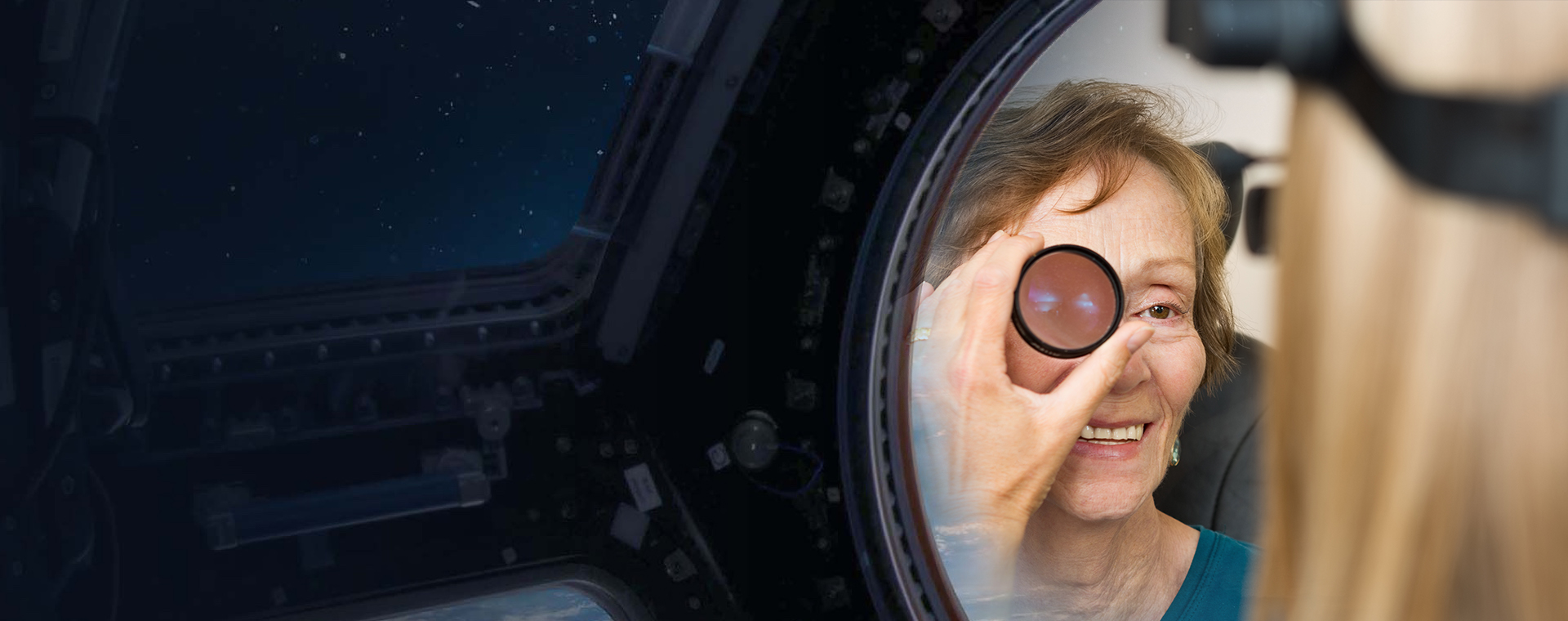

Various Options for Early Diagnosis
Along with direct ophthalmoscopy, we also offer indirect ophthalmoscopy at the Global Retina Institute.
An indirect ophthalmoscope is a diagnostic tool that helps your ophthalmologist examine the retina and optic nerve of the eye with greater detail. The inspection is done by shining a high-intensity light onto your eye while the doctor uses a lens to view your retina.
Ophthalmoscopy can assist in the early detection of different forms of eye disease, including age-related macular degeneration and retinal detachment—schedule your consultation today.
Contact UsWhat Is an Indirect Ophthalmoscope?
An indirect ophthalmoscope provides a detailed view of the retina and can help your ophthalmologist detect and diagnose eye conditions, including age-related macular degeneration, diabetic retinopathy, and retinal detachment.
Compared to direct ophthalmoscopy, which only allows the doctor to see a small part of the retina, indirect ophthalmoscopy provides a more comprehensive view of the retina.
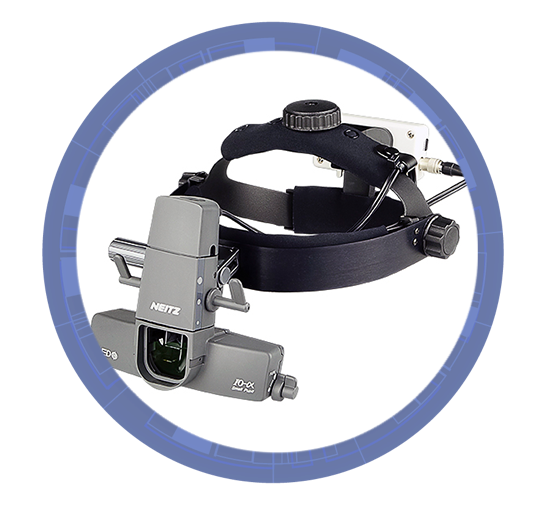
What to Expect During the Examination
During the exam, you may experience mild discomfort from the bright light, but the entire process is quick and efficient, taking less than 30 minutes.
Our team is trained to use indirect ophthalmoscopy, providing accurate diagnoses for various eye conditions.
Before
Before the examination, you must dilate your pupils with eye drops to prepare your eyes for the test.
During
During the exam, you can be seated comfortably while the ophthalmologist shines a light into your eye while using a lens to observe your retina.
After
After the examination, your eyes may remain dilated for several hours, and you may experience temporary blurred vision. We recommend that you arrange for someone to drive you home from your appointment.
Differences Between Direct & Indirect Ophthalmoscopy
Both direct and indirect ophthalmoscopes are diagnostic tools used to examine the retina, optic nerve, and other structures of the eye.
However, there are some key differences between these 2 types of ophthalmoscopes.
Direct Ophthalmoscope
The direct ophthalmoscope is typically used in a darkened room, and the patient is asked to look in a certain direction while the doctor examines their eye. However, this technique only allows the physician to see a small part of the retina at a time, making it difficult to detect smaller abnormalities.
Indirect Ophthalmoscope
In contrast, an indirect ophthalmoscope is a larger instrument with a head-mounted light source that provides a wider field of view compared to direct ophthalmoscopy. During an examination with an indirect ophthalmoscope, the doctor uses a lens to magnify the patient’s retina, allowing for a detailed view of the entire retina.
In Your Corner Against Eye Disease
Our wide range of diagnostic tools is brought in with our patients in mind. We offer wide-angle retinal imaging, slit lamps, and both direct and indirect ophthalmoscopy to help our patients achieve their vision goals.
Contact us to schedule your next consultation and learn more about your eyes and vision.
Contact UsOur Services


Visit Our Location
Where to Find Us
You can find us on East Cactus Road off North Paradise Village Pkwy E., right across from Arizona Dermatology.
Accessible Parking
Parking is available at the side of the building, and we also offer ground-floor covered parking spaces.
Our Address
- 4835 E. Cactus Rd., Ste. 105
- Scottsdale, AZ 85254
Contact Information
- Phone: 480-534-8080
- Fax: 480-534-8081
- Email: [email protected]
Hours of Operation
- Monday: 8:00 AM – 5:00 PM
- Tuesday: 8:00 AM – 5:00 PM
- Wednesday: 9:00 AM – 5:00 PM
- Thursday: 8:00 AM – 5:00 PM
- Friday: 8:00 AM – 12:00 PM
- Saturday: Emergency Only
- Sunday: Emergency Only
Affiliated Organizations







Our Google Reviews


About Us
Conditions We Treat
Specialty Treatment
Laser Floater Treatment
Ophthalmology Training
Payment Options

Global Retina Institute
- 4835 E. Cactus Rd., Ste. 105
- Scottsdale, AZ 85254
- 480-534-8080
- 480-534-8081
- [email protected]