


Preserving Your Vision
Our team at The Global Retina Institute is committed to preserving your vision and eye health. Eye issues like retinal floaters can lead to irreversible vision loss if not diagnosed and treated.
We use diagnostic testing such as ultrawide field photography, optical coherence tomography, and dilated eye exams to help detect, manage, and treat retinal floaters.
Diagnosing and treating a retinal tear is essential as it can lead to retinal detachment and possible vision loss.
Contact UsTypes of Eye Floaters
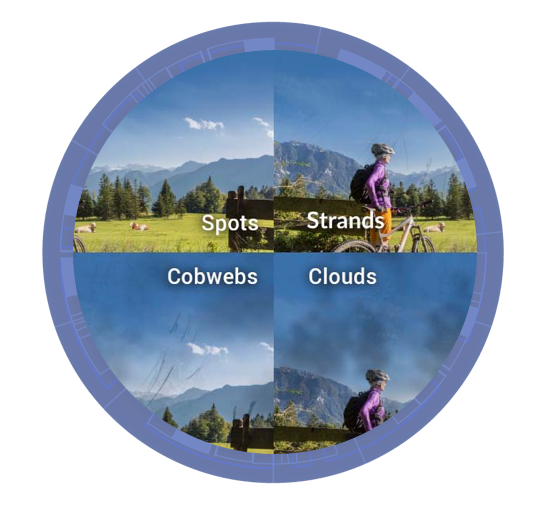
Eye floaters, also called vitreous floaters, or vitreous opacities, are scientifically called “Muscae Volitantes,” Latin for flying flies. They are essentially clumps of cells “floating” in the vitreous of the posterior segment of the eye. The vitreous makes up about 75% of the volume of the eye.
These clumps of cells can appear as:
- Black spots or specks
- Squiggly lines or strands
- Cobwebs
- Clouds
Why Do Floaters Happen?
There is a range of possible causes for eye floaters, and they are sometimes an indication of a more serious retinal condition.
While there is no singular cause of eye floaters, the most common cause is aging. As we age, the vitreous, a gel-like structure filling the back of the eye, liquifies, and as these liquid pockets or clumps of cells coalesce (syneresis), they create floaters.
Advanced Technology to Diagnose Retinal Conditions
Retinal floaters and tears can be challenging to manage and understand. Our eye exams are designed to help save you the frustration of booking additional appointments and traveling to other facilities for specific testing.
Our comprehensive exams are done in-office, so we can effectively diagnose and prepare personalized treatment plans for various retinal conditions.

Flashes In Your Vision
Flashes in your vision can be a concerning symptom that should not be ignored. At Global Retina Institute, we understand the importance of personalized care and timely treatment for your eye health.
Flashes in your vision can occur for a variety of reasons, including age-related changes in the vitreous gel inside your eye, migraines, or retinal detachment. While some cases may not require immediate attention, others may be signs of serious conditions that require prompt medical attention.
Understanding Retinal Floaters
Retinal floaters are most common in adults 55 years and older. However, they can occur earlier in life if you are nearsighted, also called myopia. Other causes include blunt trauma to your eyes or head, such as a concussion.
Retinal tears and floaters can also be potential signs of retinal detachment and should be diagnosed and treated as soon as possible.
When Is It Time to Worry?
A patient with a retinal tear may experience a sudden onset of floaters in the affected eye. Additional symptoms can include blurred vision or limited peripheral vision. Visiting us for a full retinal check-up is essential as retinal tears can sometimes display no signs.
If your floaters appear suddenly, multiply in number suddenly, or if they impair your vision, you must see a retinal specialist because it could be a posterior vitreous detachment, which can tear the retina or a retinal blood vessel. If the floater contains blood, 85% of the time, it is associated with a retinal tear.
Treating Retinal Floaters
In many cases, eye floaters can be treated without surgery. We offer an in-office procedure called Laser Floater Treatment to vaporize floaters into gas bubbles that absorb into your bloodstream. To do this, we use the FDA-approved Ellex Ultra Q Reflex Laser.
Extreme cases of eye floaters may require a surgical procedure known as a vitrectomy. Learn more by visiting our Laser Floater Treatment page.
Ultrasonography & Videography for Floaters
Ultrasonography is a noninvasive diagnostic test that utilizes sound waves to create images of the inside of the eye. This technology allows our retinal specialists to detect and evaluate abnormalities in the vitreous gel which can cause floaters.
In addition to Ultrasonography, we also use Videography to diagnose and treat floaters. Videography is a process where high-resolution images of the vitreous cavity are captured using a specialized camera. This method allows us to observe the movement and behavior of floaters and determine the best course of action for treating them.
Detailed Eye Examinations
We strive to give you the peace of mind that comes with a thorough eye examination. Our investment in technology allows us to explore the details of your eyes and detect issues that can interfere with your vision, such as retinal tears and floaters.
Ignoring eye issues can lead to stress and anxiety down the road, and we want to help you preserve your optimal, clear vision. Contact us to learn how our team can help.
Contact UsOur Services


Visit Our Location
Where to Find Us
You can find us on East Cactus Road off North Paradise Village Pkwy E., right across from Arizona Dermatology.
Accessible Parking
Parking is available at the side of the building, and we also offer ground-floor covered parking spaces.
Our Address
- 4835 E. Cactus Rd., Ste. 105
- Scottsdale, AZ 85254
Contact Information
- Phone: 480-534-8080
- Fax: 480-534-8081
- Email: [email protected]
Hours of Operation
- Monday: 8:00 AM – 5:00 PM
- Tuesday: 8:00 AM – 5:00 PM
- Wednesday: 9:00 AM – 5:00 PM
- Thursday: 8:00 AM – 5:00 PM
- Friday: 8:00 AM – 12:00 PM
- Saturday: Emergency Only
- Sunday: Emergency Only
Affiliated Organizations










Our Google Reviews


About Us
Conditions We Treat
Specialty Treatment
Laser Floater Treatment
Ophthalmology Training
Payment Options

Global Retina Institute
- 4835 E. Cactus Rd., Ste. 105
- Scottsdale, AZ 85254
- 480-534-8080
- 480-534-8081
- [email protected]